
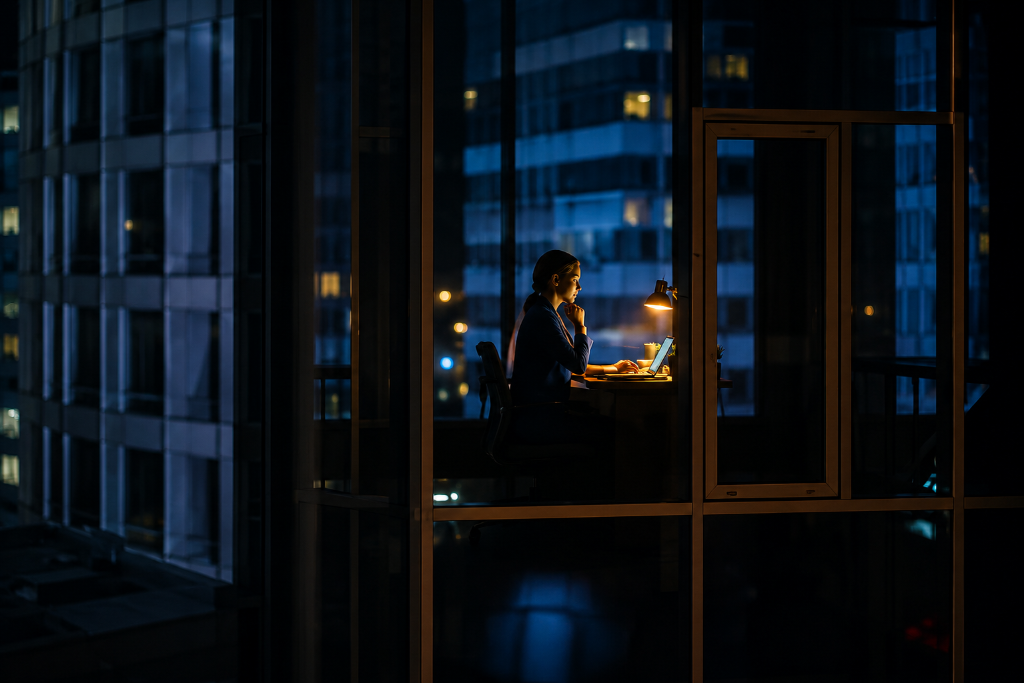
When someone calls a law firm after hours, they are almost never calling to browse. They are calling because something has happened — an accident, a dispute, a termination, a family crisis — and they need help now. They are emotionally activated, motivated to act, and ready to retain whoever picks up the phone first.
Most law firms in British Columbia let those calls go to voicemail.
The ones that do not are quietly building a significant competitive advantage — not through better marketing or lower fees, but simply by being reachable when their competitors are not.
This post looks at why after-hours call handling is one of the highest-leverage problems a BC law firm can solve, and how AI reception is making it practical for firms of every size.
The after-hours intake gap in Canadian legal practice
Legal inquiries do not follow business hours. Personal injury calls spike in the evening after accidents that happened during the day. Employment law inquiries come in after clients get home from the workplace incident that prompted them to seek counsel. Family law calls happen late at night when emotions are running high and the decision to find a lawyer has finally been made.
A significant share of new client inquiries arrive outside of standard business hours. For firms practicing in high-urgency areas — personal injury, criminal defence, employment, and family law — an outsized portion of calls come in exactly when no one is at the desk.
Yet the vast majority of BC law firms have no meaningful after-hours intake capability. A voicemail message and a promise to call back the next business day is not a client intake system. It is a competitor referral system.
Why legal leads go cold faster than any other industry
A potential client calling a law firm after hours is in a specific emotional and decision-making state. They have identified a problem, decided they need legal help, and taken action. That window of motivated decision-making is narrow.
A prospective client who does not reach a law firm on their first call typically keeps dialing until someone picks up. The firm that answers — or that follows up first — is usually the one that earns the matter. The firms that call back the next morning are often too late.
For high-value practice areas this gap is particularly costly. A single missed personal injury intake call can represent a significant contingency fee. A missed family law inquiry can represent years of ongoing billable work. These are not calls to leave to voicemail.
What AI reception looks like for a law firm
An AI receptionist for a law firm is not a phone menu or a chatbot. It is a conversational system that answers calls in your firm's name, speaks naturally with the caller, gathers the information needed for a proper intake, and delivers a complete intake summary to the appropriate lawyer or intake coordinator for follow-up.
For a law firm the configuration typically includes: the firm's practice areas and which types of matters you accept, screening questions for conflict checks, the information needed to assess urgency, and the preferred escalation path for genuinely urgent matters — such as a criminal defence call at 11pm that needs a duty counsel response.
Elocera handles all of this in a single call without the caller ever knowing they are speaking with an AI. The voice is professional, the responses are specific to your firm, and the outcome — a complete intake summary your team can act on — is indistinguishable from what your best receptionist would produce.
The cost comparison law firm partners rarely make
Hiring a dedicated after-hours intake coordinator in BC means committing to a full salary plus benefits, payroll taxes, training, and turnover costs. That person covers one shift, takes vacations, and cannot handle multiple calls simultaneously.
An answering service — the traditional alternative — charges a monthly fee but provides generic, non-specialized responses that experienced legal clients often find off-putting. Answering services cannot answer questions about your practice areas, cannot screen for conflicts, and cannot capture the detailed intake your team needs to follow up.
Elocera provides firm-specific, trained AI reception at a fraction of either cost, with immediate intake summaries delivered to your team, and the ability to handle simultaneous calls without putting anyone on hold.
For a firm capturing even one additional retained client per month from after-hours calls — a conservative expectation — the return on investment is immediate and significant.
What BC law firms should look for in an AI receptionist
Not all AI reception systems are appropriate for legal practice. When evaluating options, BC law firms should look for four things specifically.
Confidentiality and data handling. Client communications are privileged and your reception system needs to handle call data with appropriate discretion. Look for Canadian data storage, clear data retention policies, and PIPEDA compliance.
Legal-specific training. A generic AI that does not understand practice area terminology, conflict screening, or the difference between a consultation and a retainer will frustrate callers and reflect poorly on the firm. The system should be configurable to your specific practice.
Captured intake, not just messages. The goal of intake is a qualified lead your team can follow up on — not a voicemail. Your AI receptionist should capture every caller's name, number, and matter so your team can schedule the consultation.
Escalation protocols. Some calls genuinely require immediate human response. Your system should be able to identify urgency signals and route those calls appropriately rather than treating every inquiry the same way.
Elocera is configured individually for each firm during onboarding and captures every caller's details for your team to follow up.
Conclusion
The law firms gaining ground in BC right now are not always the ones with the largest marketing budgets or the most reviews on Google. They are the ones that treat every inbound call as a high-value opportunity — and have the systems in place to capture it regardless of when it comes in.
After-hours intake is not a luxury. For firms practicing in competitive, high-urgency areas, it is one of the most straightforward and highest-return operational improvements available.
If you want to hear how Elocera handles a real after-hours legal intake call — including how it screens the matter, answers questions about your practice areas, and captures the caller's details for your team — you can listen to a live demo on our website without signing up for anything.
Never miss a client intake call again
Start your 14-day free trial — no credit card required. Configured for your firm in 48 hours.
Try Elocera free →