
It happens dozens of times a week at dental clinics across British Columbia. A potential new patient calls during lunch, after hours, or while your front desk is managing a patient at the counter. The phone rings out. They hang up. They call the next clinic on Google.
You never know it happened.
The missed call does not show up on any report. It does not appear in your booking software. It leaves no trace — just a quietly compounding revenue leak that most practice owners dramatically underestimate.
This post breaks down exactly what a missed call costs a Canadian dental practice, why the problem is getting worse, and what the most forward-thinking clinics in BC are doing about it.
The numbers most dental owners have never calculated
Start with your own numbers — they are usually more sobering than any industry statistic.
Pull your last month of call logs and count the calls that went to voicemail or were never picked up. Then estimate, from your own records, how many of those were new-patient inquiries — and what a new patient is worth to your practice across the years they stay with you.
Every missed call is a patient who was ready to book — and who may have already dialed the next practice on Google. Whatever the total is for your practice, it compounds quietly, week after week.
Most practice owners, when they see their own number for the first time, do not believe it. Then they pull their call logs.
Why dental practices miss so many calls
The missed call problem at dental practices is not a staffing failure — it is a structural one. Your front desk team is doing their best. The problem is that the phone does not care about their priorities.
Here is what a typical morning looks like at a busy dental clinic. Your receptionist is checking in a patient, verifying insurance, answering questions about a treatment plan, and managing the schedule — all at the same time. The phone rings. She cannot answer it. It goes to voicemail.
The caller, a potential new patient who found your clinic on Google and took the step of actually calling, hears a generic voicemail message. Seventy percent of callers do not leave a voicemail for a business they have never dealt with before. They hang up and call someone else.
This pattern repeats itself during lunch breaks, when staff are with patients in the back, during busy Monday mornings, and every single evening, weekend, and statutory holiday when the clinic is closed. In British Columbia, where many dental practices operate five days a week with limited evening hours, after-hours calls represent a massive unmonitored window of lost opportunity.
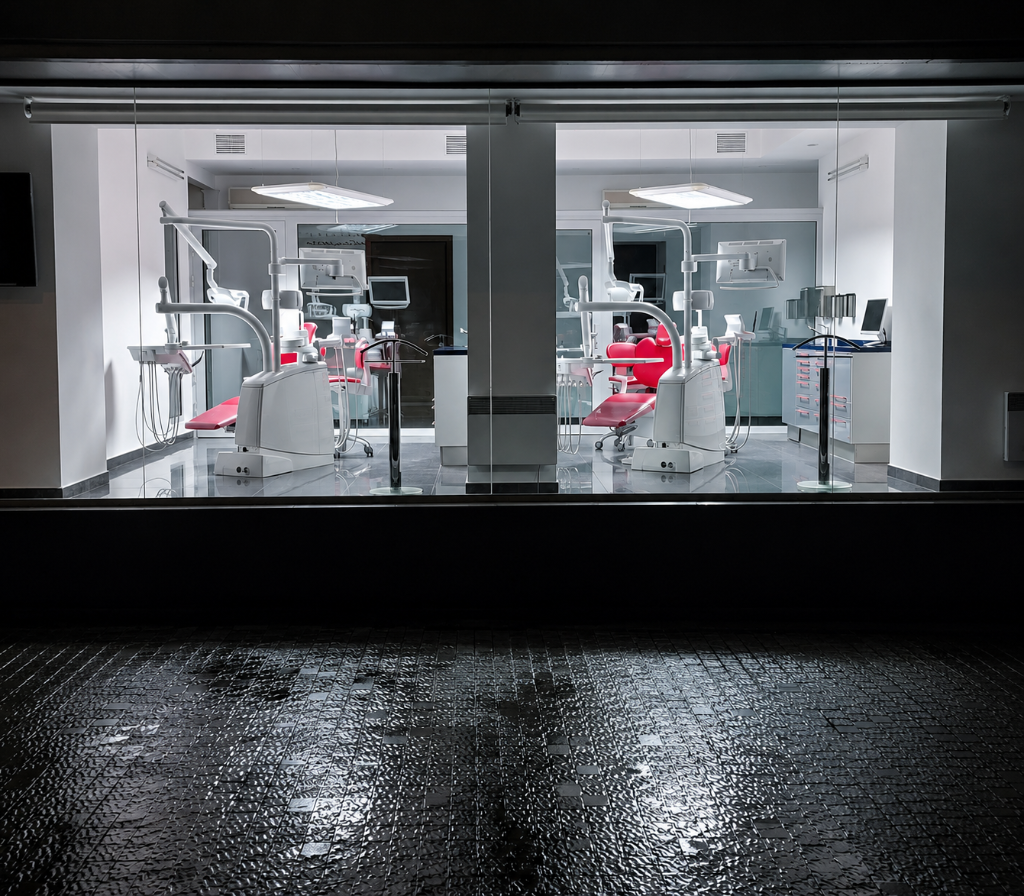
After-hours calls represent the highest-value inquiries — and the most commonly missed.
The callers most likely to call after hours are often the highest-value ones — working professionals who cannot call during their own business hours, parents calling after school pickup, and patients in pain who need urgent care and will book with whoever answers first.
The voicemail problem is worse than you think
Many practice owners believe voicemail solves the missed call problem. It does not.
Most callers who reach a voicemail when contacting a business for the first time simply hang up and try the next option — and younger patients are the least likely of all to leave a message.
Even among the callers who do leave a voicemail, the follow-up gap creates a second layer of leakage. The longer a voicemail sits unanswered, the more likely the patient is to book elsewhere. For a busy clinic, a voicemail left at 5pm on a Friday may not be returned until Monday morning — by which point the patient has often already booked elsewhere.
Voicemail was designed for a world where patients had limited options and were willing to wait. That world no longer exists in most Canadian cities. In Metro Vancouver, a patient searching for a new dentist has dozens of alternatives a Google search away. The practice that answers first wins the booking.
What the hidden costs actually include
When you calculate the cost of missed calls for your own practice, it is worth including five categories of loss that most owners do not think about:
Direct lost revenue from new patients who never book. This is the most obvious cost — the lifetime value of patients who called, did not reach anyone, and booked with a competitor.
Lost recall and reactivation revenue. Existing patients also call to book hygiene appointments, ask about treatments, and reschedule. When these calls are missed repeatedly, patients quietly drift to other practices.
Emergency patient loss. A patient in pain who cannot reach your clinic immediately will call every number on their phone until someone answers. If a competitor answers first, you lose not just that emergency appointment but potentially the entire family's ongoing care.
Referral loss. Every new patient your practice converts has the potential to refer two to three additional patients over their lifetime. Every new patient you lose to a missed call takes those referrals with them.
Staff time cost. Your front desk spends significant time every week returning missed calls, managing voicemail, and chasing leads that have already gone cold — time not spent on patient care or scheduling efficiency.
What forward-thinking BC dental practices are doing about it
The most effective solution dental practices are adopting in 2025 is AI-powered call answering — a system that picks up every call instantly, speaks in the clinic's voice, answers common questions, and captures every caller's name, number, and request for the practice to follow up.
Unlike voicemail, an AI receptionist has a real conversation with the caller. It can answer questions about services, explain insurance acceptance, and capture the caller's details for your team to follow up — all in the same call, at any hour of the day or night.
Unlike hiring an additional receptionist, an AI system costs a fraction of the monthly overhead, never calls in sick, never goes on vacation, and handles simultaneous calls without putting anyone on hold.
For dental practices in BC specifically, the combination of high competition in Metro Vancouver and the Fraser Valley, a bilingual patient population, and the dominance of online search as the primary discovery channel makes phone responsiveness a direct competitive advantage. The clinics answering every call are pulling patients from the clinics that are not.
Elocera was built specifically for this problem. It can be configured with your clinic's specific services, fee guide responses, insurance questions, and intake protocols in under 48 hours.
The simple calculation worth doing today
Before you decide whether solving your missed call problem is worth prioritizing, run this calculation for your own practice:
Whatever number you get, it is likely larger than you expected — and at that scale, solving the missed call problem stops being a nice-to-have and becomes one of the highest-return investments a practice owner can make.
Conclusion
Missed calls are not a front desk problem. They are a systems problem — and like most systems problems, they have a systems solution.
The dental practices gaining ground in BC right now are not necessarily the ones with the best clinical reputation or the most Google reviews. They are the ones that answer every call, at every hour, and capture every inquiry before the patient has time to dial a competitor.
If you want to see exactly how Elocera handles a real patient call for a dental practice — including how it answers insurance questions and captures every caller's details — you can hear it live on our website without signing up for anything.
Because the best way to understand what you have been missing is to hear what your patients hear when someone actually picks up.
Stop losing patients to missed calls
Start your 14-day free trial — no credit card required. Live in 48 hours.
Try Elocera free →